
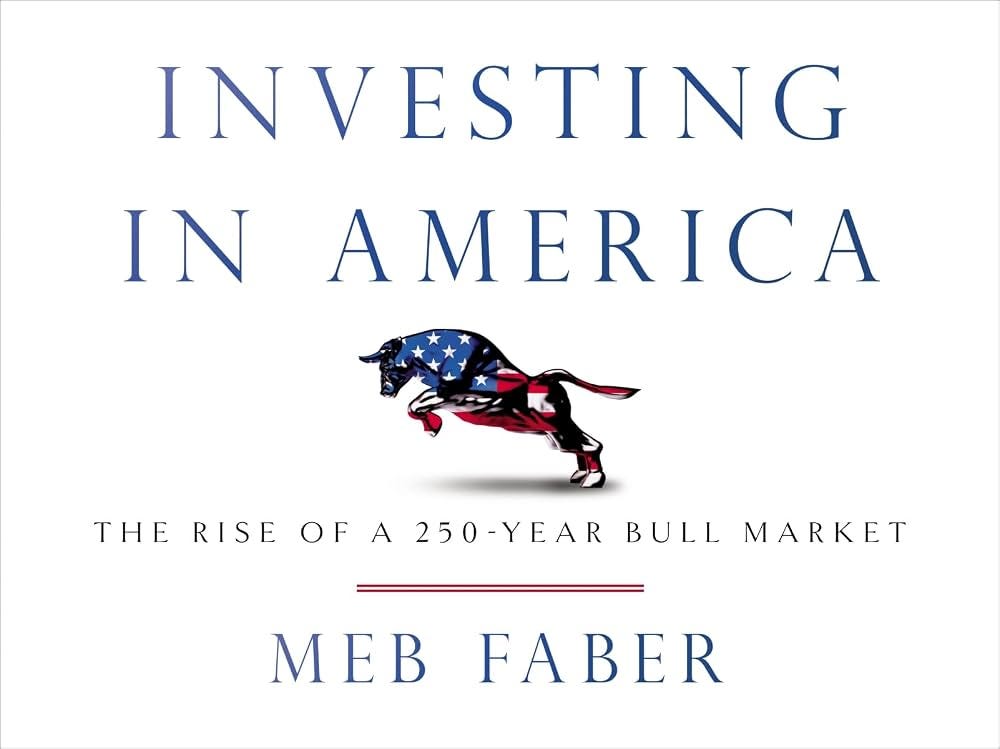
Meb Faber, founder and CIO of Cambria Investment Management, which oversees nearly $5 billion across 20 systematic, rules-based ETFs, joined Bid/Ask live last week on X Spaces to discuss his new book, Investing in America: The Rise of a 250 Year Bull Market, and dig into what’s made the US market resilient across that stretch, along with Cambria’s flagship shareholder yield strategy.
What’s Made the US Market Resilient
Faber traces the story back through 250 years of constant sector turnover: railroads and utilities dominated a century ago, energy once made up a third of the S&P and is now under five percent, and today it’s technology’s turn. That pattern of reinvention, paired with a culture that tolerates risk-taking and failure, is part of what he sees underpinning long-term US resilience. He connects that same risk appetite to today’s more speculative corners of the market, prediction markets, zero-day options, meme stocks, arguing none of it is new, just easier to access than it used to be. The book’s real aim, he explained, is to put the long, unglamorous story of compounding in front of a generation used to instant outcomes, a reminder, timed for whenever the next downturn comes, that markets have recovered from every crisis before it.
Dividends vs. Shareholder Yield
The conversation’s core: Cambria’s shareholder yield approach, which looks at both dividends and net stock buybacks, rather than dividends alone. Faber’s research found that most investors, retail and professional alike, don’t understand even the basics of how dividends work, and that the dividend-yield framing many advisors sell borders on misleading given how much of shareholder return now comes through buybacks rather than cash payouts. Companies that are “serial diluters,” through stock-based comp and share issuance, get penalized in the strategy, while companies buying back stock and shrinking their share count, what Charlie Munger called “cannibals,” get rewarded.
Performance and Cycles
Cambria’s oldest shareholder yield fund, SYLD, has a 10-year annualized return of 13.2% versus a peer average of 10.3%, putting it in the 6th percentile of its Morningstar category. Asked when the strategy performs best, Faber pointed to sideways or down markets, where a focus on cash-generative, disciplined companies tends to hold up better, while the most euphoric, straight-up bull runs (like the current one) tend to be when it lags. He noted 2024 and 2025 were among its weaker relative years even as 2026 has been strong. His framing: a strategy doesn’t need to win every year, just enough of them, 50 to 60%, to compound into top-decile long-term results.
Global Diversification and Where We Are Now
Faber’s take: there’s no scenario where investing in a single country beats investing globally over time, and he pointed to Cambria’s own research showing a portfolio with zero US stocks would still have produced fine long-term returns. He flagged that South Korea’s market has tripled over the past year, driven partly by government pressure on companies to improve shareholder returns, a version of the shareholder yield thesis playing out at a national level.
That global lens colors his read on where things stand today. Despite market highs, Faber noted consumer sentiment (Michigan survey) is near all-time lows, historically a contrarian bullish signal, not a topping one. The takeaway: euphoric as the market feels, the underlying numbers don’t yet look like the ones you’d expect to see at a top.
Meb’s book Investing in America can be found on Amazon: amzn.to/4wOXn7G
Information about the Godel Terminal: https://godelterminal.com/